Carl Jung Quotes About Life and the Psyche
Carl Jung, the pioneering Swiss psychiatrist, profoundly shaped our understanding of the human psyche. His theories of the unconscious, persona, shadow, and individuation have helped millions navigate the inner darkness that accompanies self-discovery. Through Carl Jung quotes about life, Jung offered gateways into his philosophy—urging us to confront who we really are beneath the surface roles we play. These 25 quotes about life reveal the transformational journey Jung invites us to take, from repression to consciousness, from mask to meaning, and from fragmentation to integration in the cosmos of the self.
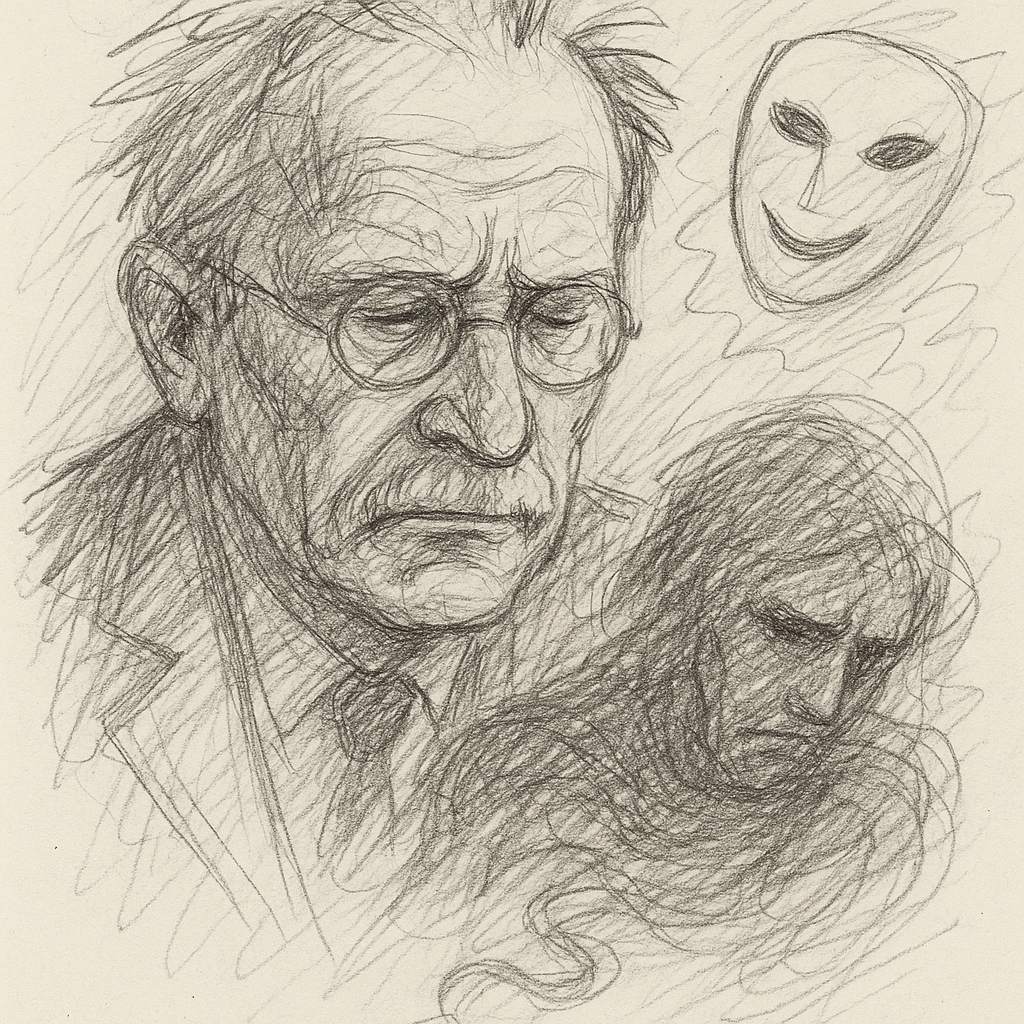
1. “The persona is not who we are, but who we pretend to be to avoid who we are.”
This reflects Jung’s concept of the persona—the social mask we wear to adapt to external expectations. While useful for societal roles, over-identification with the persona disconnects us from our authentic self.
2. “What we resist in the unconscious becomes our destiny.”
Jung believed unacknowledged aspects of the unconscious guide our lives covertly. Repression doesn’t eliminate psychological content—it merely ensures it manifests unconsciously, often as projected fate.
3. “You wear the mask long enough, and the face beneath forgets it ever existed.”
This elaborates on the persona. When we suppress the true self for too long, we risk losing our inner identity entirely, living through roles rather than reality.
4. “To confront the shadow is to meet yourself for the first time—without illusion.”
The shadow represents repressed parts of the self—instincts, desires, and traumas. True self-discovery demands we face the shadow without moral judgment.
5. “The truth of the soul is buried under the roles we learn to survive.”
Survival mechanisms, formed in childhood or trauma, often distort identity. Jung suggests that the soul’s truth is hidden beneath learned behavior meant to protect us.
6. “Discomfort is the doorway to authenticity; comfort is often the echo of repression.”
Jung viewed discomfort as a necessary catalyst for growth. Avoidance leads to stagnation; discomfort signals places where change and healing are possible.
7. “Until you make the unconscious conscious, it will direct your life and you will call it fate.”
One of Jung’s most famous lines, this underpins his idea of individuation—the process of becoming whole through integrating unconscious material into consciousness.
8. “The mask is a necessary lie, but a lie nonetheless.”
Acknowledging that the persona serves a social purpose, Jung reminds us that it’s still a fabrication—useful, but potentially misleading if unexamined.
9. “Every mask conceals a wound; every wound points to the self.”
Behind each socially acceptable mask lies a psychic wound, often from early life. These wounds, if explored, become keys to inner wholeness.
10. “The unconscious is not dark by nature; it is dark because it is unknown.”
Jung redefined the unconscious not as evil, but as undiscovered. Darkness in the psyche results from ignorance, not malevolence.
11. “In each of us is another whom we do not know.”
This quote captures the mysterious inner other—the shadow, the anima/animus, or the collective unconscious. Jung urges dialogue with this inner stranger.
12. “Your discomfort is a summons—the psyche calling you back to wholeness.”
Pain is meaningful in Jungian psychology. It signals disintegration and calls for reintegration of fragmented parts of the self.
13. “Reality begins where the mask slips and the shadow speaks.”
True consciousness arises when we drop our defenses and allow the repressed parts of the psyche to be seen and heard.
14. “Growth begins when we no longer fear the truth hidden in our depths.”
Facing the hidden truths of our past, desires, and flaws initiates psychological development—central to Jung’s therapeutic method.
15. “The more we deny the shadow, the more power it gains over our waking life.”
Repression empowers the shadow. Denied content returns as compulsions, projections, or symptoms. Awareness diffuses its grip.
16. “To become who you are, you must let go of who the world told you to be.”
Authenticity requires releasing imposed identities—family expectations, societal norms, and roles that conflict with the inner self.
17. “Pain is not the enemy—it is the tutor of inner transformation.”
Jung saw pain as a guide. In therapy and individuation, pain is what drives insight, emotional release, and eventual renewal.
18. “We meet ourselves time and again in a thousand disguises on the path of life.”
Life is cyclical. The psyche offers recurring opportunities for self-realization through relationships, dreams, and synchronicities.
19. “There is no coming to consciousness without pain.”
Growth is difficult. Becoming conscious of the unconscious entails facing grief, shame, and conflict—but leads to liberation.
20. “What you hide from the world is often what you most need to bring into it.”
This encourages creative vulnerability. Often, our gifts are linked to what we’ve been conditioned to suppress.
21. “The persona adapts to the world; the soul adapts to the truth.”
While the persona allows social function, the soul seeks inner harmony. The two often conflict, requiring conscious alignment.
22. “Discomfort reveals the places where our masks no longer fit.”
When personas become outdated, they produce internal friction. This discomfort urges renewal and deeper authenticity.
23. “Every encounter with the unconscious is a step into your becoming.”
Each interaction with repressed content furthers individuation—our evolution into integrated, conscious beings.
24. “You cannot awaken to life while clinging to the dream of who you should be.”
Letting go of ideals and illusions is essential for spiritual and psychological awakening.
25. “The self is not something found, but something remembered beyond the masks.”
Jung believed the Self already exists within. It is rediscovered through the peeling away of false identities.
For deeper reflection, explore 15 more Carl Jung quotes that will change how you see yourself.
Living Jung’s Wisdom
Throughout this exploration of Carl Jung quotes about life, we’ve uncovered how his insights challenge us to move beyond appearances and dive into the psychological depths that define our experience. Whether we’re exploring the shadow, confronting the unconscious, or wrestling with our persona, these Carl Jung quotes about life offer a mirror to our inner world and a map to personal transformation.
FAQs About Carl Jung and the Human Psyche
What is the shadow in Jungian psychology? The shadow is the unconscious part of the personality that contains repressed weaknesses, desires, and instincts. Integration of the shadow leads to psychological wholeness.
What does Jung mean by individuation? Individuation is the lifelong psychological process of differentiation of the self out of each individual’s conscious and unconscious elements.
How can I begin shadow work? Start by observing recurring emotional triggers, journaling dreams, or working with a therapist familiar with Jungian methods.
What is the difference between the ego and the persona? The ego is the center of consciousness; the persona is the social mask the ego adopts to fit in with societal expectations.
Are Jung’s ideas still relevant today? Absolutely. Jung’s work influences modern psychotherapy, self-help, spiritual practices, and even creative fields like literature and film.